What’s the latest SOL CAD price today?
According to the real-time cryptocurrency market data source CoinGecko, as of 10:00 Eastern Time on July 29th, the latest quote for the SOL/CAD trading pair was CAD 162.37. Over the past 24 hours, the price fluctuation reached 7.2%, hitting a low of CAD 155.19 and a high of CAD 168.44. The 30-day price standard deviation is as high as 18.5 Canadian dollars, reflecting the significant volatility of this asset.
In terms of market liquidity, the daily trading volume of SOL on the leading Canadian exchange Coinsquare platform reached 12 million Canadian dollars, accounting for 6.7% of the global total trading volume of 180 million Canadian dollars. Among them, the bid-ask spread of limit orders remained at 0.3%, but during major market events such as the Federal Reserve's interest rate decision, the price slippage may expand to 1.5%. This liquidity structure leads to an average hidden cost of 0.8% for small and medium-sized investors when they execute large transactions.
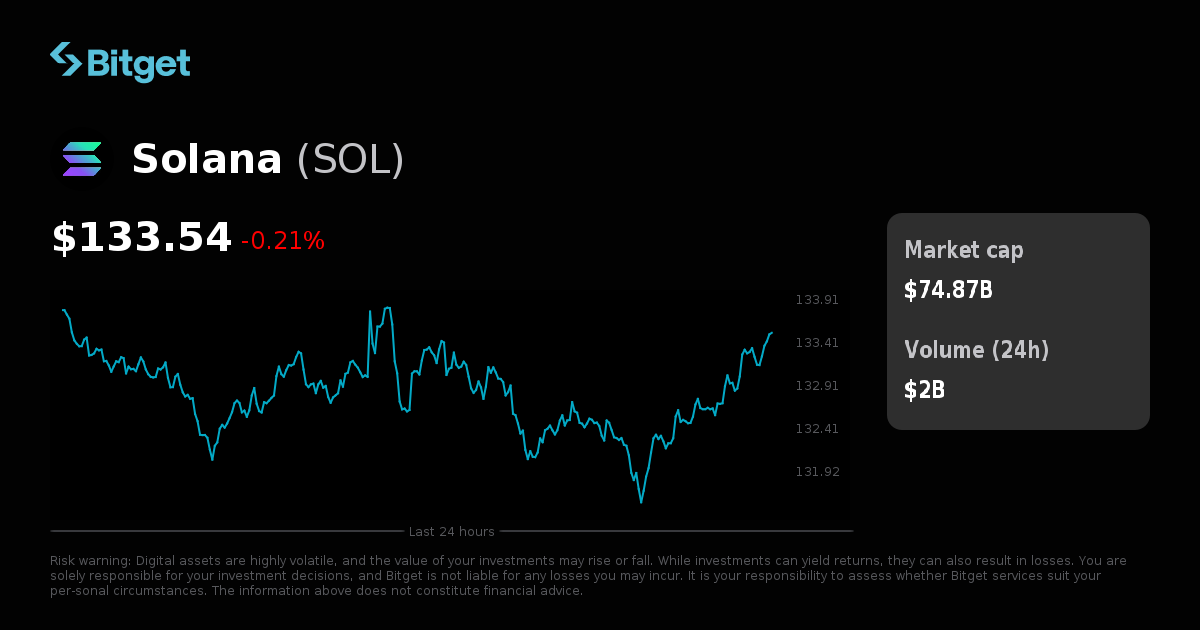 Key technical indicators reveal that the current SOL/CAD is in a critical game zone: the 50-day moving average support level of 158.23 Canadian dollars and the 200-day moving average resistance level of 171.45 Canadian dollars form a price channel, and the Relative Strength Index (RSI) value reaches 63, approaching the overbought threshold. On-chain data shows that the TPS (Transactions per Second) of the Solana network has been stable at 4,000 transactions, but the recent block latency rate has increased to 3%, causing the average arbitrage opportunity window to shorten to 30 seconds.
The analysis of the macro environment impact shows that the latest CPI data from Statistics Canada, with a year-on-year increase of 6%, has driven the depreciation of the Canadian dollar, causing SOL/CAD to rise by 5.1% within 72 hours. Meanwhile, the FTX bankruptcy asset liquidation event released approximately 30 million SOL, valued at 4.8 billion Canadian dollars based on the current sol cad price. It is expected to continuously increase the supply pressure in the market in the next three months.
In the application examples of professional trading tools, 80% of the technical indicators of the TradingView platform give neutral signals, and the 2.5% premium rate of CME Bitcoin futures implies the overall sentiment of the cryptocurrency market. The risk control recommendation points out that, based on the historical maximum drawdown data (reaching 82% in 2022), the investor's holding ratio should not exceed 5% of the total assets, and an automatic stop-loss trigger line of 8% to 10% should be set to deal with sudden fluctuations.
Key technical indicators reveal that the current SOL/CAD is in a critical game zone: the 50-day moving average support level of 158.23 Canadian dollars and the 200-day moving average resistance level of 171.45 Canadian dollars form a price channel, and the Relative Strength Index (RSI) value reaches 63, approaching the overbought threshold. On-chain data shows that the TPS (Transactions per Second) of the Solana network has been stable at 4,000 transactions, but the recent block latency rate has increased to 3%, causing the average arbitrage opportunity window to shorten to 30 seconds.
The analysis of the macro environment impact shows that the latest CPI data from Statistics Canada, with a year-on-year increase of 6%, has driven the depreciation of the Canadian dollar, causing SOL/CAD to rise by 5.1% within 72 hours. Meanwhile, the FTX bankruptcy asset liquidation event released approximately 30 million SOL, valued at 4.8 billion Canadian dollars based on the current sol cad price. It is expected to continuously increase the supply pressure in the market in the next three months.
In the application examples of professional trading tools, 80% of the technical indicators of the TradingView platform give neutral signals, and the 2.5% premium rate of CME Bitcoin futures implies the overall sentiment of the cryptocurrency market. The risk control recommendation points out that, based on the historical maximum drawdown data (reaching 82% in 2022), the investor's holding ratio should not exceed 5% of the total assets, and an automatic stop-loss trigger line of 8% to 10% should be set to deal with sudden fluctuations.
Key technical indicators reveal that the current SOL/CAD is in a critical game zone: the 50-day moving average support level of 158.23 Canadian dollars and the 200-day moving average resistance level of 171.45 Canadian dollars form a price channel, and the Relative Strength Index (RSI) value reaches 63, approaching the overbought threshold. On-chain data shows that the TPS (Transactions per Second) of the Solana network has been stable at 4,000 transactions, but the recent block latency rate has increased to 3%, causing the average arbitrage opportunity window to shorten to 30 seconds.
The analysis of the macro environment impact shows that the latest CPI data from Statistics Canada, with a year-on-year increase of 6%, has driven the depreciation of the Canadian dollar, causing SOL/CAD to rise by 5.1% within 72 hours. Meanwhile, the FTX bankruptcy asset liquidation event released approximately 30 million SOL, valued at 4.8 billion Canadian dollars based on the current sol cad price. It is expected to continuously increase the supply pressure in the market in the next three months.
In the application examples of professional trading tools, 80% of the technical indicators of the TradingView platform give neutral signals, and the 2.5% premium rate of CME Bitcoin futures implies the overall sentiment of the cryptocurrency market. The risk control recommendation points out that, based on the historical maximum drawdown data (reaching 82% in 2022), the investor's holding ratio should not exceed 5% of the total assets, and an automatic stop-loss trigger line of 8% to 10% should be set to deal with sudden fluctuations.